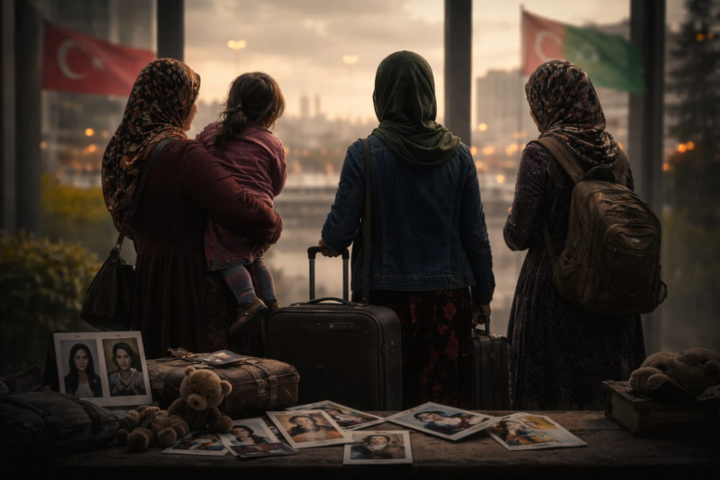
International Women’s Day is not only a day of flowers and congratulations. It is a day when the world remembers the struggle of women for dignity, safety, and equal rights. But for thousands of women from Turkmenistan, this day is a reminder of a different reality — a reality in which their lives unfold between poverty, migration, violence, and silence. The tragedy of a Turkmen woman does not begin when she crosses the border. It begins much earlier — at the moment when she realizes that she has no real choice left. When a mother looks into the eyes of her children and understands that she cannot provide them with a dignified life. When economic crisis, unemployment, and the absence of social protection take away her future. When she is forced to make a decision that breaks her heart: to leave in order to save her children from poverty, but to leave them without their mother’s love and protection. When people say that migration is a choice, one simple question arises: what exactly were they choosing between? Between poverty and separation? Between hunger and loneliness? Thousands of women from Turkmenistan leave for Turkey and other countries in search of work. They work as cleaners, caregivers, seamstresses, factory workers, and domestic workers in private homes. Many of them work without contracts, without insurance, and without legal protection. They live in constant fear — fear of losing their job, fear of deportation, fear of violence, fear that if something happens to them, no one will protect them. And this fear is not abstract. It is based on real tragedies. In June 2023, Mähri Ereshova, a citizen of Turkmenistan and a mother of two children, was murdered in Istanbul. She had come to Turkey to work and provide a future for her family. Instead, her children lost their mother forever. That same year, another tragedy shocked many people. In Izmir, Turkmen citizens Gulkamar Khanymova and her daughters Leyla and Lachin Geldiyarova, as well as Ruslan Kerimov, were killed. This was a family that had tried to build a life far from home. They were looking for safety and a chance to survive. Instead, their lives ended in tragedy. But violence does not occur only outside Turkmenistan. There is the tragedy of Guljemal Jumamuratova, a 20-year-old woman who died in Ashgabat under circumstances that her family considers suspicious. At the time, her mother was working in Turkey as a migrant worker and has since been trying to seek truth and justice. There is the story of Eje Gul Ovezova, who died in Turkey under suspicious circumstances. Despite serious questions surrounding the official version of events, the case was closed without a proper investigation. There is the case of Jamal Bazarova, a mother of two young children who is currently in the women’s prison in Dashoguz. She reported that she was subjected to violence during the investigation by investigators Ashyrgeldy Musaev and Bakhtiyar Muradov, and later reported abuse inside the prison. To this day, no one has been held accountable. There is also the tragedy of Gulala Hasanova, whose husband, civil activist and blogger Alisher Sakhadov, disappeared on July 24, 2025. She was left alone with four children and with questions that still remain unanswered. All of these stories share one common element — the absence of protection. When a migrant woman faces violence abroad, she often fears contacting the police because she risks deportation or losing her job. When tragedy occurs inside Turkmenistan, families often face the absence of transparent investigations. And when tragedy happens abroad, diplomatic missions that should protect their citizens often fail to provide real support. As a result, the woman is left alone. Alone with her pain. Alone with her tragedy. Alone with her children. Migration has destroyed thousands of families. Mothers live far from their children. Children grow up without their mothers. Families break apart. Many women grow up in an environment where they are taught to endure violence and remain silent. They fear social condemnation. They fear that no one will believe them. And this silence becomes part of a system that allows violence to continue. The root of this tragedy is the absence of effective protection of human rights. In a country where there is no independent judiciary, justice cannot be achieved. In a country where there is no freedom of speech, the truth cannot be openly discussed. In a country where civil society does not exist, victims cannot be protected. This is why the human rights platform “DAYANÇ / Turkmenistan” was created — to give a voice to those who are not heard and to draw international attention to the situation of Turkmen women. But speaking about the problem is not enough. Real mechanisms of protection are needed. We call for the creation of support centers for migrant women at Turkmen diplomatic missions abroad. These centers should operate 24 hours a day and provide real assistance to women in crisis. Such centers must offer: — legal assistance — psychological support — temporary safe shelter — food and basic humanitarian support They must become places where a woman can come at any time of day or night and receive real help. Places that she can call her homeland and her home. Because a state should not end at its borders. A state must protect its citizens wherever they are. On the eve of International Women’s Day, we want the world to hear the names of these women: Guljemal Jumamuratova Eje Gul Ovezova Mähri Ereshova Gulkamar Khanymova Leyla Geldiyarova Lachin Geldiyarova Jamal Bazarova And we want the world to know about Gulala Hasanova and her children, who are still waiting for their father. Turkmen women are not just migrants. They are mothers. They are daughters. They are human beings. And they deserve protection, justice, and safety. Silence can no longer be the answer.
As a foundation, every individual's fundamental
protect and develop their rights
we are working for.