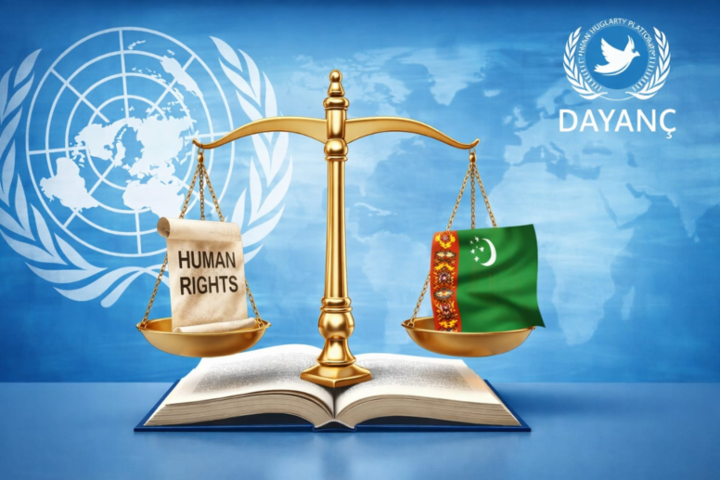
The Human Rights Platform of the Civic Movement “Dayanç” Turkmenistan closely monitors international assessments of the human rights situation in the country. One of the key mechanisms for such evaluation is the Universal Periodic Review (UPR) of the UN Human Rights Council, through which every UN member state undergoes an expert review of its human rights record. During the latest review, Turkmenistan accepted 146 out of 228 recommendations presented by diplomats from 77 countries. These recommendations covered a wide range of issues, including the protection of civil and political rights, freedom of expression, women’s rights, labor rights, and social and economic guarantees. On the international stage, the authorities declared their readiness to cooperate with human rights mechanisms and expressed their intention to bring national legislation into line with international standards. However, over time a legitimate question arises: to what extent are these promises being implemented in practice? Lack of Transparency and Real Reforms Despite official statements, the Government of Turkmenistan has not provided the public with detailed information about what concrete steps are being taken to implement the accepted recommendations. Even meetings between UN representatives and government officials are conducted without public disclosure of their outcomes, making the implementation process largely non-transparent for civil society. Particular concern arises from the fact that independent human rights organizations and civic initiatives are effectively excluded from discussions and implementation processes related to these recommendations. Women's Rights Among the recommendations supported by Turkmenistan were measures aimed at combating gender-based violence and developing support programs for women. International experts also recommended: expanding women’s access to reproductive health services; ensuring the availability of modern contraceptives; guaranteeing equal participation of women in public and political life. However, a number of important recommendations were only “noted” by the government, meaning no commitment was made to implement them. These include: adopting comprehensive legislation against gender-based violence; removing restrictions on women’s freedom of movement; banning degrading practices such as forced “virginity tests.” Freedom of Expression and Internet Access Turkmenistan stated that it supports recommendations related to ensuring freedom of expression and access to the Internet. However, the real situation remains far from these commitments. In practice: independent news websites are blocked; access to many social media platforms is restricted; independent journalism is virtually absent in the country. This raises serious questions about the government’s willingness to implement its international obligations. Labor Rights Turkmenistan supported recommendations to combat forced labor, including the development of a national action plan to eliminate forced and child labor in the cotton sector. However, international organizations continue to report numerous cases where employees of public institutions are compelled to participate in agricultural work, including cotton harvesting. Socio-Economic Rights Within the framework of the recommendations, the authorities also declared their intention to: reduce poverty; increase citizens’ incomes; improve access to education and healthcare. Yet ongoing economic difficulties, rising food prices, and widespread labor migration of Turkmen citizens indicate that these problems remain unresolved. Recommendations That Were Not Accepted A number of recommendations were not accepted by the Government of Turkmenistan. These mainly concerned the most sensitive issues, including: strengthening judicial independence; ensuring freedom of speech and peaceful assembly; adopting comprehensive anti-discrimination legislation; decriminalizing consensual same-sex relations between adults. This demonstrates that many of the most serious human rights concerns remain outside the political agenda. International Obligations and State Responsibility Turkmenistan has been a member of the United Nations since 1992 and has participated in the Universal Periodic Review mechanism since its creation. The purpose of this mechanism is not only to identify human rights concerns but also to encourage states to implement meaningful reforms. However, the effectiveness of this process largely depends on political will and open dialogue with civil society. Conclusion The Human Rights Platform of the Civic Movement “Dayanç” Turkmenistan believes that the implementation of international recommendations should not remain limited to formal declarations. Real progress is possible only through: transparency in government actions; participation of independent civil society organizations; protection of freedom of expression; respect for the fundamental rights and dignity of every citizen. Human rights cannot remain a declaration — they must become a real and consistent practice of state policy.
As a foundation, every individual's fundamental
protect and develop their rights
we are working for.