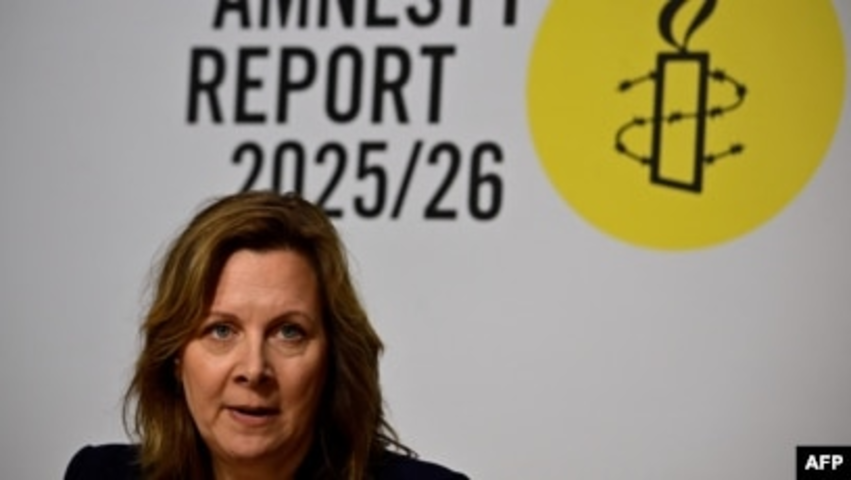
Official Amnesty International Position: Statement in Berlin On April 20, 2026, in Berlin, Julia Duchrow, Secretary General of Amnesty International Germany, presented the organization’s annual report. It was during this presentation that the international assessment of the situation in Turkmenistan was clearly articulated. > “The government exercised strict control over information, punished critics, and maintained internet censorship.” This statement is not an individual opinion — it reflects the official position of one of the world’s leading human rights organizations, delivered at a high-level international platform. Total Control and Suppression of Freedom of Expression The report emphasizes that Turkmenistan remains a country where: independent media do not exist the internet is heavily censored criticism of authorities leads to persecution > “Independent voices were subjected to pressure, travel restrictions, and punishment.” This amounts to a near-total isolation of society from alternative sources of information. Disappearances, Torture, and Closed Trials Amnesty International highlights the ongoing pattern of enforced disappearances: > “Reports of enforced disappearances continued, and prisoners were not released even after completing their sentences.” A striking example is the case of Myrat Dushemov, who, after completing his prison term, was not released but instead sentenced to an additional eight years following a closed trial. This demonstrates the absence of: an independent judiciary transparency basic legal safeguards Repression Beyond Borders One of the most alarming findings is the persecution of Turkmen citizens abroad. > “Authorities targeted independent critics abroad, exposing them to detention and possible deportation.” The report mentions: Umida Bekjanova, held in a deportation center in Türkiye activists Alisher Sahatov and Abdulla Orusov, who disappeared after detention > “They disappeared from a deportation center, and there is a possibility they were secretly transferred to Turkmenistan.” This is no longer just domestic repression — it is transnational repression. Death in Custody and Lack of Transparency The case of blogger Didar Amansahedov is particularly disturbing: > “After criticizing the authorities, he disappeared, and later reports emerged of his death under unclear circumstances.” Amnesty International draws a direct conclusion: > “Torture and other forms of ill-treatment in detention continued, and there was no independent monitoring.” Economic Growth Without Human Rights Despite official claims of economic growth, Amnesty International notes: > “Economic growth did not translate into improved living conditions, particularly for low-income populations.” The government prioritizes large-scale energy projects over: social protection access to basic resources the well-being of citizens Impunity as a System The central issue is the absence of accountability. Impunity for: forced deportations enforced disappearances torture persecution of activists leads directly to the repetition of these violations. Cases such as: Sahatov and Orusov Bekjanova and others are not exceptions — they reflect a systemic pattern. Conclusion The statement by Julia Duchrow in Berlin sends a clear message to the international community: this is not about isolated incidents — it is about a deeply entrenched system of repression. Without: international pressure transparent investigations accountability the situation will continue to deteriorate. Sources: Amnesty International Report 2025/2026 Azatlyk Radiosy (Radio Free Europe/Radio Liberty) https://www.azathabar.com/a/amnesty-international-hokumet-maglumata-berk-gozegcilik-etdi-tankytcylary-jezalandyrdy/33736983.html Human rights in Туркменистан Amnesty International https://share.google/B4EIaIeNO2mwAMlcc Julia Duchrow, Secretary General of Amnesty International Germany, gives a statement to journalists in Berlin on April 20, 2026, regarding Amnesty International’s 2025/2026 annual report. Photo source: Radio Azatlyk (Turkmenistan)
As a foundation, every individual's fundamental
protect and develop their rights
we are working for.