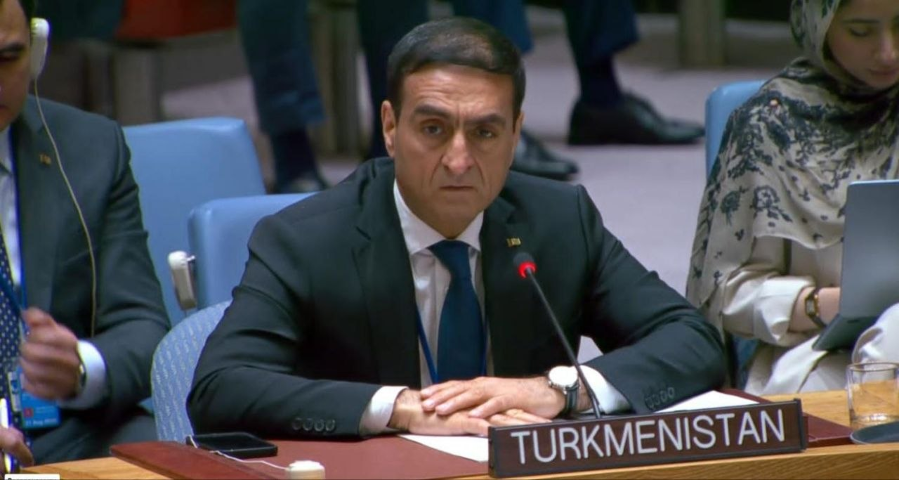
Turkmenistan at the UN: Artificial Intelligence, Pandemics and Diplomacy in Uniform On the international stage, Turkmenistan continues to demonstrate remarkable enthusiasm for global initiatives. The country is proposing that the United Nations develop an International Code for the Peaceful Use of Artificial Intelligence, host an International Digital Dialogue in Ashgabat, and discuss pandemic prevention, international law, sustainable transport and other global issues. It all sounds modern and ambitious — provided one does not ask how closely these international declarations correspond to Turkmenistan’s domestic policies. On 28 September, Turkmenistan’s Permanent Representative to the UN, Vepa Hajiyev, speaking during the General Debate of the 81st session of the UN General Assembly, proposed developing an International Code for the Peaceful Use of Artificial Intelligence under the auspices of the United Nations. Turkmenistan also proposed holding an international dialogue in Ashgabat on digital trust and the responsible use of AI. At the same time, the Turkmen delegation has been actively discussing pandemic prevention and preparedness at the UN. Here, the contrast is particularly striking: for years, Turkmenistan’s authorities have faced criticism from independent media and international observers over their denial of COVID-19 cases in the country and the lack of transparency surrounding the impact of the pandemic. This creates a peculiar diplomatic formula: apparently, it is easier to discuss pandemics from the UN podium than to publicly acknowledge them at home. The figure of Vepa Hajiyev himself also deserves attention. His background and previous work within Turkmenistan’s state structures are relevant in this context. In 2023, turkmen.news published an article entitled “Diplomats in Uniform” examining personnel changes within Turkmenistan’s Ministry of Foreign Affairs and links between members of the diplomatic establishment and the country’s security structures. Against this background, Ashgabat’s international diplomacy can sometimes appear quite literally to be “diplomacy in uniform.” The contrast between international rhetoric and domestic realities is equally striking. Turkmenistan regularly presents initiatives at the UN concerning peace, international law, trust and cooperation, while human rights organisations and independent media continue to report serious concerns regarding fundamental rights, including restrictions on freedom of expression and freedom of movement, pressure on activists and their relatives, the absence of independent media, the closed nature of state institutions and the lack of effective mechanisms for legal redress. The country’s lack of transparency also deserves particular attention. When emergencies occur or reports emerge of serious problems inside Turkmenistan, official information is often extremely limited. Yet on the international stage, Ashgabat proposes mechanisms of transparency, trust and global cooperation for other countries. Artificial intelligence has now been added to this list. International initiatives concerning the safe and peaceful use of AI can, of course, be legitimate subjects for serious discussion. But a straightforward question arises: what would “responsible use of artificial intelligence” mean in a state where serious concerns persist regarding citizens’ access to information, freedom of expression and the transparency of public institutions? And there is another question: if Turkmenistan is proposing new codes, concepts and mechanisms of trust to the international community, why not begin by fully implementing its existing international human rights obligations? The United Nations is an appropriate forum for discussing artificial intelligence, pandemics and international law. But the UN podium should not become an attractive backdrop behind which the situation of people inside the country disappears from view. And before teaching artificial intelligence the principles of responsibility, perhaps the priority should be ensuring the accountability of state institutions to their own citizens.
As a foundation, every individual's fundamental
protect and develop their rights
we are working for.