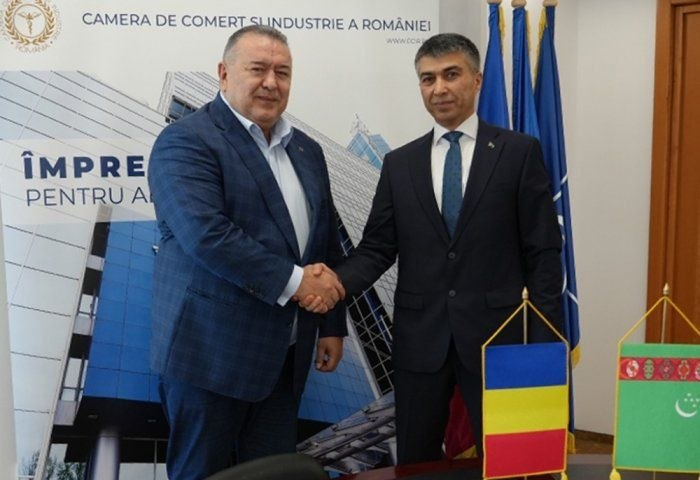
Turkmen Gas for Europe: Romania Discusses a New Route, but Who Will Raise the Issue of Human Rights? Romania has proposed reviving the AGRI (Azerbaijan–Georgia–Romania Interconnector) energy project, which could potentially provide Turkmen natural gas with an additional route to the European market. The initiative was discussed during a meeting between Turkmenistan’s Ambassador to Romania, Annamered Annayev, and the President of the Chamber of Commerce and Industry of Romania, Mihai Daraban. The parties discussed energy cooperation, collaboration between the ports of Constanța and Turkmenbashi, and prospects for expanding bilateral trade. At first glance, this appears to be purely an economic matter. However, for the citizens of Turkmenistan, another equally important question arises: Can Europe expand major energy cooperation with Turkmenistan while largely avoiding the issue of the human rights situation in the country? Billions of Cubic Metres of Gas — but Where Is the Prosperity for Citizens? Turkmenistan possesses some of the world’s largest natural gas reserves. During the talks in Romania, the Turkmen side once again emphasized that the country ranks fourth in the world in terms of proven natural gas reserves. Yet enormous natural wealth has not provided Turkmen citizens with transparency in public finances, freedom of information, or the ability to scrutinize how the country’s national resources are managed. The public has virtually no access to independent and comprehensive information about how much the state earns from gas exports, under what terms major contracts are concluded, and how these revenues are spent. For this reason, discussions about a new European route for Turkmen gas cannot be separated from the issue of transparency. Turkmenistan’s natural resources do not belong to individual officials — they constitute the national wealth of the country, and its citizens have the right to know how revenues generated from their sale are used. Gas Must Not Overshadow Human Rights There is an even more serious concern. Economic cooperation is developing against the backdrop of years of reports by international human rights organizations documenting serious human rights violations in Turkmenistan. There are no independent media outlets operating freely in the country, while freedom of expression and freedom of association remain severely restricted. Human rights defenders, activists, and government critics face pressure and persecution. Concerns persist over politically motivated prosecutions, restrictions on freedom of movement, and obstacles preventing citizens from obtaining identity and travel documents. Particular concern surrounds cases of transnational repression targeting Turkmen citizens outside the country, including pressure against activists and their relatives, as well as cases in which individuals have been returned to Turkmenistan despite serious concerns about their subsequent fate and safety. There are also cases involving people sentenced many years ago whose families have long been denied reliable information about their whereabouts, health, and fate. Against this background, a legitimate question arises: Will human rights become part of Romania’s dialogue with Turkmenistan, or will bilateral relations once again be built primarily around gas, transport, and trade? Appeal to Romania The Human Rights Platform of the Dayanç / Turkmenistan Civil Movement appeals to the Government of Romania, the Ministry of Foreign Affairs of Romania, the Chamber of Commerce and Industry of Romania, and Romanian companies that may participate in energy and infrastructure projects involving Turkmenistan. We are not calling for an end to economic cooperation with Turkmenistan. On the contrary, international engagement can create opportunities for positive change. However, cooperation with a state possessing enormous natural gas reserves must not mean remaining silent about the rights of its citizens. We call on the Romanian side to systematically include human rights issues in its political and economic dialogue with the authorities of Turkmenistan. In particular, we believe that the following issues must be raised: political prisoners and enforced disappearances; persecution of civil society activists and independent voices; transnational repression; restrictions on the right to leave the country and obstacles to obtaining passports; the situation of women and children facing violence and a lack of effective protection; freedom of the media and access to information; the independence of the judiciary and the rule of law. Particular attention should also be paid to transparency regarding revenues generated by the sale of Turkmenistan’s natural gas and other natural resources. If Turkmen gas is to become part of Europe’s energy security, European partners are entitled to ask whether the country’s national wealth is contributing to improving the lives and well-being of the people of Turkmenistan. Europe’s Energy Security Must Not Be Built on Silence AGRI could become an important economic project. The Port of Constanța could potentially become one of the gateways for Turkmen energy resources and goods to reach the European market. But precisely for this reason, while the future of this cooperation is being discussed, the conversation must not be limited to pipelines, terminals, ports, and billions of cubic metres of gas. It must also be about people. We appeal to Romania, as a member state of the European Union and the Council of Europe, to use the expansion of relations with Turkmenistan not only to pursue economic interests, but also to consistently promote human rights, the rule of law, and transparency. Turkmenistan needs international partners. But the citizens of Turkmenistan also need international partners who will not turn a blind eye to their rights for the sake of energy contracts. Gas may connect Turkmenistan and Europe economically. The question is whether this cooperation can also contribute to greater openness, government accountability, and the protection of the rights of the people of Turkmenistan.
As a foundation, every individual's fundamental
protect and develop their rights
we are working for.