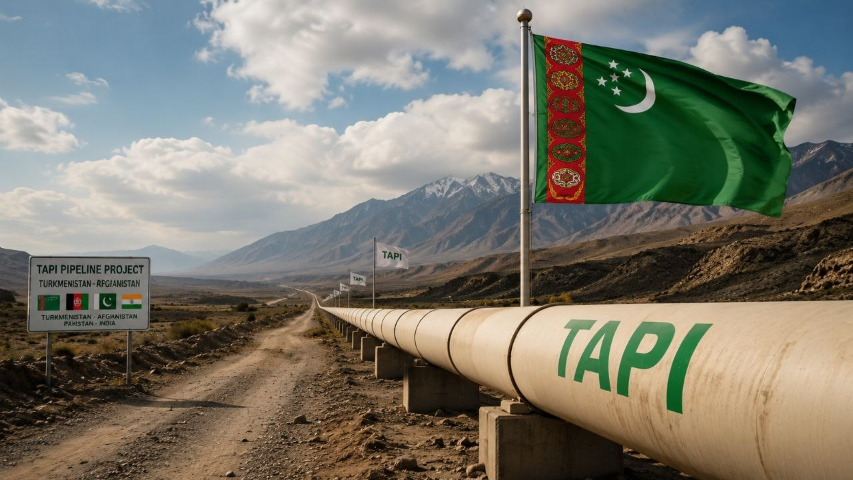
TAPI: A Pipeline of Hope or a Project of High Risks? Source: Turan News TV Based on published information regarding the current status of the TAPI gas pipeline project. The Turkmenistan–Afghanistan–Pakistan–India (TAPI) gas pipeline has once again attracted international attention following reports that construction on the Afghan section has entered an intensive phase. Turkmen authorities emphasize significant progress: hundreds of specialists, heavy machinery, new contracts, and dozens of kilometers of security infrastructure have already been deployed. At first glance, TAPI appears to be one of the most important economic opportunities for Turkmenistan in recent decades. However, behind the official announcements lies a complex combination of political, economic, environmental, and human rights concerns that continue to cast doubt on the project's long-term viability. An Economic Opportunity for Turkmenistan For Turkmenistan, TAPI is of strategic importance. Today, Turkmen gas exports remain heavily dependent on a limited number of markets, particularly China. The successful completion of TAPI could: Diversify export routes; Reduce dependence on a single buyer; Provide access to rapidly growing South Asian markets; Increase foreign currency revenues; Strengthen Turkmenistan’s regional influence. With a projected capacity of approximately 33 billion cubic meters of natural gas per year, the pipeline has the potential to significantly impact the country's economy. However, an important question remains: can the anticipated benefits outweigh the considerable risks? Afghanistan: The Greatest Source of Uncertainty The most vulnerable segment of the project remains Afghanistan. Despite assurances from Afghan authorities regarding security, the current government lacks broad international recognition. Furthermore, not all regions of the country are under the same level of effective control. For TAPI to function successfully, it will require: Continuous protection of the pipeline; Security for construction sites; Protection of personnel; Secure transportation and logistics corridors. Any major attack, sabotage incident, or escalation of armed conflict could halt operations and discourage investors for years. International sanctions affecting the Taliban also create uncertainty regarding financing, insurance, and long-term operation of the project. Pakistan and India: Persistent Political Risks TAPI was originally designed as a four-party regional initiative. However, the longstanding tensions between Pakistan and India continue to pose a serious challenge to the project's stability. Recent years have demonstrated that even localized incidents or terrorist attacks can quickly escalate into broader diplomatic or military confrontations. Under such circumstances, it remains unclear whether both countries will be willing to maintain long-term dependence on shared energy infrastructure. Even if construction in Afghanistan is completed, political instability between the final consumers could undermine the project's success. The Qosh Tepa Canal: An Underestimated Threat Another issue that deserves greater attention is the construction of Afghanistan’s Qosh Tepa Canal. Many experts warn that the project could have significant consequences for the Amu Darya River basin and the wider region. Potential impacts include: Reduced water availability; Deterioration of water quality; Increased soil salinization; Reduced agricultural productivity; Environmental degradation. Critics argue that while significant political attention is being devoted to TAPI, issues related to water security have received far less public discussion and transparency. For millions of people living in rural communities, water shortages may ultimately have a greater impact on daily life than the economic benefits generated by gas exports. Corruption and Lack of Transparency Another critical issue that receives little official attention is transparency. Turkmenistan remains one of the most closed countries in the world. The absence of independent media, limited public access to information, and the lack of effective public oversight create substantial risks for large-scale infrastructure projects. International investors typically evaluate: Levels of corruption; Judicial independence; Investment protection mechanisms; Dispute resolution procedures; Financial transparency and accountability. Without credible guarantees in these areas, investor confidence may remain limited regardless of the project's technical progress. Human Rights and Labor Standards Major infrastructure projects inevitably raise important human rights concerns. International standards require: Respect for workers' rights; Safe and fair working conditions; Independent safety monitoring; Protection for whistleblowers and workers reporting violations; Accessible complaint and grievance mechanisms. In Turkmenistan, independent labor unions are effectively absent, while opportunities for independent monitoring remain highly restricted. As a result, international stakeholders may face growing scrutiny regarding labor rights and social safeguards associated with the project. Personality Cult and Political Symbolism The symbolic dimension of the project has also attracted attention. The decision to name the first section of the Afghan route “Arkadagyň Ak Ýoly” (“The Bright Path of Arkadag”) demonstrates how large infrastructure projects continue to be linked to personality-driven political narratives. For foreign investors, such politicization may be perceived as an additional risk factor. Long-term energy projects require institutional stability, predictable governance, and transparent policies rather than dependence on individual political figures. Conclusion TAPI remains one of the most ambitious infrastructure projects in Central Asia. If completed successfully, it could provide Turkmenistan with a valuable new export route and strengthen its position in regional energy markets. However, the future of the project depends on far more than the number of kilometers of pipeline laid or roads constructed. Without meaningful progress in the areas of security, transparency, human rights, anti-corruption measures, environmental protection, and regional stability, TAPI risks becoming another symbol of unrealized expectations. Experience shows that sustainable development cannot be built on natural gas alone. It also requires trust, accountability, the rule of law, and respect for human rights—factors that ultimately determine the success of any major international project.
As a foundation, every individual's fundamental
protect and develop their rights
we are working for.