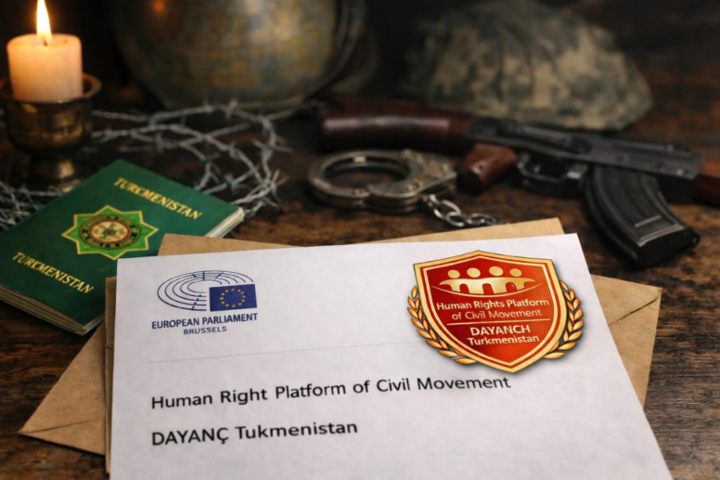
Dear Members of the European Parliament, The Human Rights Platform of the Civic Movement DAYANÇ / Turkmenistan addresses you in connection with the interparliamentary meeting between the European Union and Turkmenistan, held in Brussels on March 5. We highly value the importance of dialogue between the European Union and the countries of Central Asia and recognize the role of the European Parliament in promoting democracy, human rights and the rule of law. At the same time, we consider it necessary to draw your attention to serious systemic human rights concerns in Turkmenistan that require closer and more principled attention within the framework of EU cooperation with the authorities of Turkmenistan. The real situation faced by citizens of Turkmenistan, both inside the country and abroad, differs significantly from the picture often presented in official statements and diplomatic discussions. In particular, we would like to draw attention to the following issues. Citizens of Turkmenistan living abroad are effectively denied the issuance and renewal of passports at Turkmen diplomatic missions. This is not a matter of isolated cases but a systemic practice. As a result, thousands of people are left without valid identity documents and lose the ability to legally live and work, access healthcare, enroll their children in educational institutions, cross borders, sign employment contracts, rent housing or defend their rights through legal means. The absence of documents makes Turkmen citizens extremely vulnerable to exploitation, informal and illegal labor practices, and criminal networks. Many find themselves in conditions close to modern-day slavery, where individuals have little real freedom of choice and are forced to accept dangerous and degrading working conditions. Serious concern also exists regarding the practice of forced labor. Citizens deprived of documents and legal protection become particularly vulnerable to exploitation by intermediaries and employers. The lack of a passport and legal status often pushes individuals into situations of dependency where refusing work may mean losing their only means of survival. Another issue requiring urgent attention is the potential recruitment of Turkmen citizens for participation in the war against Ukraine. Migrants who are left abroad without documents and legal status may become targets of pressure and recruitment by Russian structures. Their vulnerable situation, combined with the fear of deportation and the impossibility of regularizing their status, makes them particularly susceptible to such coercive practices. Turkmenistan lacks an independent judiciary. The judicial system does not operate independently from the executive branch, depriving citizens of the possibility of a fair and impartial trial. Independent journalism is virtually nonexistent in the country. Freedom of speech and expression is severely restricted, while independent journalists, bloggers and civic activists face intimidation and persecution. Basic civil rights and freedoms of Turkmen citizens are systematically violated, including the freedom of movement. We would also like to highlight that Article 30, Paragraph 9 of the migration legislation of Turkmenistan contradicts international human rights standards and obligations. This provision allows the authorities to restrict citizens from leaving the country, effectively violating the right to freedom of movement and family reunification. In addition, cases of transnational repression against Turkmen civil activists and bloggers outside Turkmenistan continue to be documented. Of particular concern is the fate of Turkmen civic activists Alisher Sakhadov and Abdulla Orusov, who disappeared after being detained in Turkey. Their whereabouts remain unknown, raising serious concerns about their safety and well-being. We believe that discussions of economic and political cooperation between the European Union and Turkmenistan should be accompanied by a consistent and principled dialogue on human rights, the rule of law and the protection of fundamental freedoms. In this regard, we respectfully call upon the institutions of the European Union to: — pay increased attention to human rights issues in Turkmenistan within the framework of political dialogue with the authorities; — raise the issue of the systematic refusal to issue and renew passports to Turkmen citizens abroad; — address the risks of forced labor, exploitation and involvement of vulnerable migrants in armed conflicts; — provide a legal and political assessment of Article 30, Paragraph 9 of Turkmenistan’s migration legislation; — call for a transparent investigation into cases of transnational repression, including the disappearance of Alisher Sakhadov and Abdulla Orusov; — support independent human rights initiatives and civil society actors working to protect the rights of Turkmen citizens. For decades, the European Union has been one of the world’s leading defenders of democracy, human dignity and human rights. For the citizens of Turkmenistan, these principles are not abstract values but matters of daily security, freedom and dignity. We sincerely hope that future dialogue between the European Union and Turkmenistan will contribute not only to the development of cooperation but also to real improvements in the protection of human rights and fundamental freedoms of the citizens of Turkmenistan. Thank you for your attention to this matter. Respectfully, Human Rights Platform of the Civic Movement DAYANÇ / Turkmenistan
As a foundation, every individual's fundamental
protect and develop their rights
we are working for.