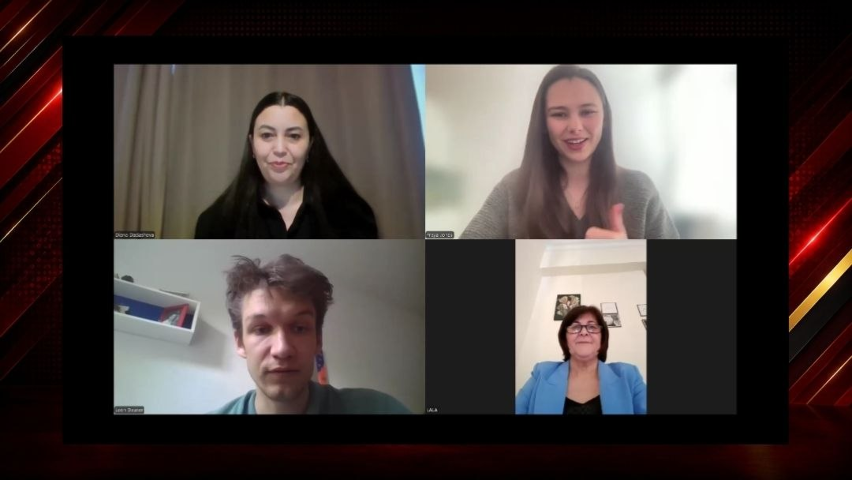
Students of Freie Universität Berlin Conducted an Interview with Representatives of the Human Rights Platform of the Civil Movement “Dayanç” on the Problems of Turkmen Civil Society Representatives of the Human Rights Platform of the Civil Movement “Dayanç” took part in an important interview with students of Freie Universität Berlin who are studying in the Master’s program “Eastern European Studies: History, Politics and Society in Eastern Europe.” The interview was initiated by student Leon Alexander Deusser, who, together with his colleagues, is conducting a research project dedicated to the situation of civil activists and human rights defenders from Turkmenistan in Europe and the Republic of Türkiye. A student from England also joined the interview and demonstrated significant interest in the issues of civil society, human rights, and transnational repression. During the interview, many of the most serious problems faced by citizens of Turkmenistan abroad were discussed in detail. Special attention was devoted to: the problem of refusal to issue and renew passports for citizens of Turkmenistan through diplomatic missions abroad; violations of Article 29, Paragraph 3 of the Migration Legislation of Turkmenistan; the problem of Article 30, Paragraph 9, which contradicts international law concerning freedom of movement and family reunification; the absence of international and temporary protection for activists; transnational repression; the use of Interpol mechanisms and the G-82 code in the Republic of Türkiye; threats, pressure, and persecution against activists; the problems of civil society and the crisis of trust within the human rights environment; issues of transparency and monitoring of human rights activities; the consequences of the absence of documents and legal protection for citizens of Turkmenistan. During the interview, representatives of “Dayanç” spoke in detail about the difficulties faced by activists, journalists, human rights defenders, and ordinary citizens of Turkmenistan in migration countries, as well as about the necessity of creating international protection mechanisms and safe relocation opportunities for victims of persecution. Particular attention during the interview was devoted to the requests and proposals of the Human Rights Platform of the Civil Movement “Dayanç” regarding the protection of civil activists and human rights defenders located in the Republic of Türkiye and the countries of the Commonwealth of Independent States. Representatives of “Dayanç” emphasized the necessity of: creating an international “green corridor” for vulnerable activists, human rights defenders, and victims of transnational repression; establishing temporary crisis support centers under the Office of the United Nations High Commissioner for Refugees for the safe accommodation of activists until their relocation to third safe countries; ensuring the issuance and renewal of passports for citizens of Turkmenistan through Turkmen diplomatic missions abroad; strengthening international response mechanisms regarding transnational repression and forced deportations. It was noted that the absence of documents, international protection, and safe evacuation mechanisms makes civil activists extremely vulnerable to threats, pressure, deportations, exploitation, and other human rights violations. Another important subject of the interview was the discussion of why representatives of “Dayanç” believe that the current system of power in Turkmenistan, including the Gurbanguly Berdimuhamedov clan and the special services of Turkmenistan, represents a threat to the statehood of the country. During the interview, it was emphasized that the state must not be identified with the authorities or with a particular political clan. According to representatives of “Dayanç,” when state structures focus not on solving social, economic, and human rights problems, but instead on persecuting their own citizens, civil activists, and journalists, this causes serious damage to the state itself and to its future. Representatives of “Dayanç” noted that instead of combating corruption, poverty, mass migration, social problems, and human rights violations, the resources of the special services are directed toward surveillance, pressure, locating activists abroad, organizing transnational repression, and suppressing all forms of dissent. According to the participants of the interview, such policies destroy public trust in state institutions, intensify fear within society, contribute to mass emigration, and undermine the future of the country. It was also emphasized that the absence of accountability and impunity for human rights violations creates a dangerous system in which state mechanisms are used not to protect citizens, but against them. The interview took place in a respectful, professional, and highly engaged atmosphere. It was clear that the young researchers sincerely wished to better understand the situation of Turkmen civil society and to bring this information to European society. The Human Rights Platform of the Civil Movement “Dayanç” expresses its sincere gratitude to the students of Freie Universität Berlin and all participants of the interview for their attention to human rights problems in Turkmenistan, for their interest in the fate of civil activists, and for their desire to inform the international community about the real situation in the region. It is especially important to see that the younger generation of researchers, students, and future specialists in international relations, human rights, and civil society demonstrates interest in the problems of Turkmenistan and seeks to study issues that for many years remained insufficiently covered at the international level. We are convinced that international solidarity, open dialogue, and the attention of young people to human rights issues can play an important role in protecting human dignity, freedom, and the safety of people.
As a foundation, every individual's fundamental
protect and develop their rights
we are working for.