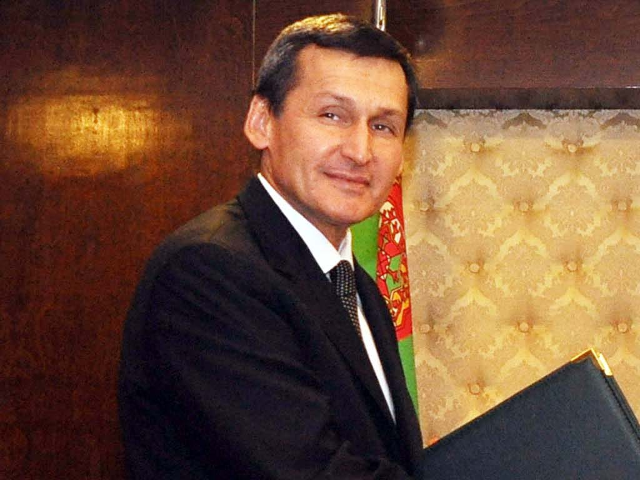
Rashid Meredov is often portrayed as an experienced diplomat and one of the most influential political figures in Turkmenistan. His political career is indeed long. He holds a PhD in law, is a trained lawyer, and graduated from Moscow State University. Since the early 1990s he has been working within the highest levels of the state apparatus. Since 2001 he has served as the Minister of Foreign Affairs of Turkmenistan, and since 2003 he has also held the position of Deputy Chairman of the Cabinet of Ministers. More than twenty years as foreign minister is an exceptionally long tenure by international diplomatic standards. However, a fundamental question arises: What exactly has this long diplomatic experience brought to the citizens of Turkmenistan? And here the most surprising aspect begins. Despite decades at the head of the country’s foreign policy apparatus, one of the most basic problems facing citizens remains unresolved. Turkmen diplomatic missions abroad do not issue passports to their own citizens. Thousands of Turkmen citizens living outside the country are unable to obtain a new passport or replace an expired one through embassies or consulates. This is not merely a bureaucratic issue. A passport is a fundamental personal document. Without it, people cannot: — legally reside — work — study — receive medical care — process official documents — move freely Yet for many Turkmen citizens abroad, obtaining a passport has become an almost impossible task. And this situation has continued not for a year or two, but for decades. The situation becomes even more striking when one looks at Turkmenistan’s own legislation. According to Article 29 of the Migration Law of Turkmenistan, citizens of Turkmenistan residing abroad must be issued passports through diplomatic missions and consular offices. In other words, the law clearly establishes the state’s obligation to provide passports to its citizens outside the country. The current practice of refusing to issue passports through diplomatic missions therefore contradicts not only international standards but also Turkmenistan’s own laws and constitutional guarantees of citizens’ rights. This raises an obvious question: Why are state institutions ignoring their own laws? Is this administrative incapacity? Or is it a deliberate policy of control over citizens? Another important issue is freedom of movement. This is particularly striking given that Rashid Meredov frequently speaks about international law and international legal obligations. However, Article 30, paragraph 9 of Turkmenistan’s migration legislation allows authorities to restrict citizens’ right to leave the country. This provision contradicts international standards on freedom of movement. The contrast is therefore striking. On the one hand — public statements about international law. On the other — domestic legal mechanisms that restrict the rights of citizens. Speaking about international law while simultaneously undermining it is a very unusual diplomatic practice. There is also another issue. As Minister of Foreign Affairs, Rashid Meredov oversees the work of all Turkmen diplomatic missions abroad. For this reason, it cannot be excluded that he may play a key role in the system of pressure exerted on citizens outside the country. In recent years, there has been an increasing number of reported cases of transnational repression against Turkmen citizens. These include: — pressure on activists — persecution of critics of the government — attempts to intimidate citizens abroad — cooperation between state structures and foreign security services Such cases have been reported particularly often in Türkiye and the Russian Federation. It must be emphasized that transnational repression constitutes a serious violation of human rights and international law. Such crimes have no statute of limitations. This leads to a logical question: Do the citizens of Turkmenistan need a foreign minister who, for decades, has failed to resolve their fundamental problems? A minister under whose tenure: — citizens cannot obtain passports through diplomatic missions — freedom of movement is restricted — diplomatic structures may be used as instruments of pressure against citizens Diplomacy should protect citizens. But when diplomacy turns into a system of control over one’s own population, it ceases to be diplomacy. It becomes something entirely different. And the actions of such officials deserve international legal and political scrutiny. Human Rights Platform of the Civil Movement “Dayanch Turkmenistan”
As a foundation, every individual's fundamental
protect and develop their rights
we are working for.