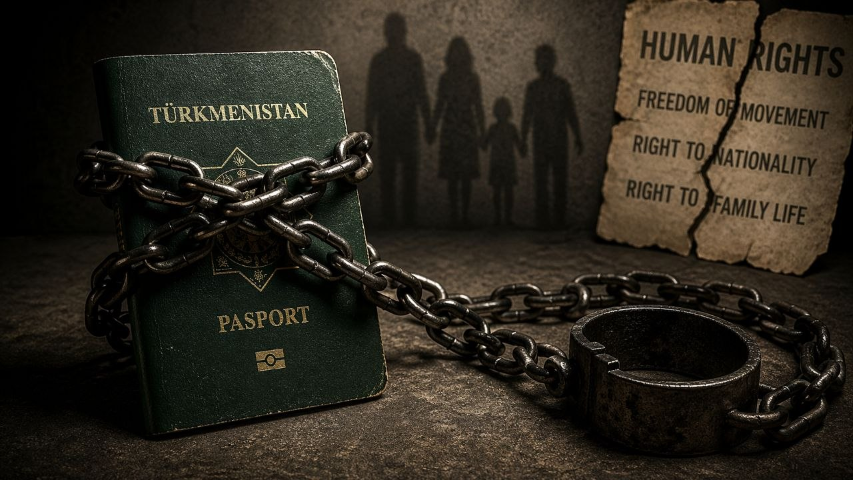
Passports as a Tool of Pressure: How Turkmenistan Deprives Its Citizens of Rights and Exposes Them to Transnational Repression Thousands of citizens of Turkmenistan today find themselves in a situation increasingly described as a legal vacuum. They live abroad, work, raise children, and try to integrate into the societies of host countries — yet at the same time they are deprived of a fundamental element of legal protection: identity documents. The cause of this situation is systemic. According to Article 29(3) of the Law of Turkmenistan “On Migration”, the state is obliged to provide its citizens with passports through diplomatic and consular missions abroad. However, in practice, this provision is not implemented at all. Citizens of Turkmenistan in Germany and other countries openly report their inability to obtain or renew passports through embassies, despite direct appeals. This has been reported by independent sources, including Radio Azatlyk: Source: https://www.azathabar.com/a/germaniyada-turkmenistanlylar-turkmen-ilcihanasyndan-pasport-almaga-mumkincilik-doredilmegini-sorayarlar/33740671.html --- Life Without Documents: Invisible People The absence of a passport is far more than an administrative issue. It means: inability to regularize one’s legal status restrictions on freedom of movement lack of access to healthcare obstacles to children’s education inability to obtain formal employment constant risk of detention A person without documents is left in a position where they are deprived of both rights and the means to defend them. --- From Bureaucracy to a Tool of Control At first glance, this problem may appear bureaucratic. In reality, however, it has taken on a systemic and controlled character. The refusal to issue passports has effectively become a tool of pressure over citizens. By depriving people of documents, the state: maintains control over them restricts their freedom makes them dependent on state decisions This creates the foundation for an even more dangerous phenomenon — transnational repression. --- Transnational Repression: When Borders Do Not Protect Citizens of Turkmenistan living abroad — particularly in CIS countries and Türkiye — increasingly face pressure, threats, detention, and risks of deportation. The absence of a passport significantly amplifies these risks: individuals cannot confirm their legal identity cannot obtain effective legal protection cannot secure their legal status This makes them vulnerable to: detention deportation transfer to the authorities of Turkmenistan Among those currently at risk of transnational repression are: Umida Bekjanova Gulala Hasanova (with four minor children) Diana Dadasheva (with two minor children) Zarina Akhtyamova (with two minor children) Akhmet Rakhmanov (with children) and many other citizens of Turkmenistan in similar situations. Particular concern arises from the fact that women and children are among those at risk, which gives this issue a clear humanitarian dimension. --- Punishment for Seeking Justice The situation is further aggravated by the fact that even attempts to defend one’s rights may lead to serious consequences. According to available information and documented cases: обращения to state authorities interaction with international organizations public statements may result in: pressure intimidation politically motivated persecution arbitrary detention imprisonment This is evidenced by the cases of: journalist Soltan Achilova activist Nurgeldy Khalykov In such a system, individuals are forced to choose between silence or risking their freedom. --- A Law That Traps Citizens An additional problem is Article 30(9) of the Law of Turkmenistan “On Migration”, which allows for restrictions on leaving the country. In practice, this results in: inability to leave the country freely risk of exit bans upon return inability to reunite with family members Hundreds of families have already been separated, including: the Sazonov family Lachyn Gench the Minmuratov family --- Why People Do Not Return A common question arises: why do citizens not return to Turkmenistan to obtain documents? The answer lies in the conditions within the country: economic crisis lack of employment opportunities deteriorating infrastructure limited access to healthcare systemic problems in education absence of an independent judiciary widespread corruption systemic human rights violations Returning under such conditions is not a solution, but a risk. --- Consequences for the International Community The problem of undocumented citizens of Turkmenistan extends beyond a single country. Thousands of people without documents: remain in legal grey zones lack full legal protection become vulnerable to exploitation This creates broader challenges for host countries and international institutions. --- What Must Be Done The Human Rights Platform of the Civil Movement “Dayanç” / Turkmenistan calls for: Authorities of Turkmenistan: to ensure the issuance and renewal of passports through diplomatic missions to comply with Article 29(3) of the Law “On Migration” to revise Article 30(9) to guarantee freedom of movement and family reunification to cease persecution of citizens for defending their rights International Community: to provide a legal assessment of the situation to increase pressure on the authorities of Turkmenistan to develop protection mechanisms for undocumented individuals to take into account the risks of transnational repression to ensure protection of vulnerable groups, including women and children --- Conclusion Today, thousands of citizens of Turkmenistan live in conditions where they: have no documents cannot return to their country cannot regularize their legal status and are afraid to defend their rights This is not merely an administrative issue. It is a systemic deprivation of rights, security, and future. --- Source: https://www.azathabar.com/a/germaniyada-turkmenistanlylar-turkmen-ilcihanasyndan-pasport-almaga-mumkincilik-doredilmegini-sorayarlar/33740671.html Website: https://www.dayanchcivil.com/
As a foundation, every individual's fundamental
protect and develop their rights
we are working for.