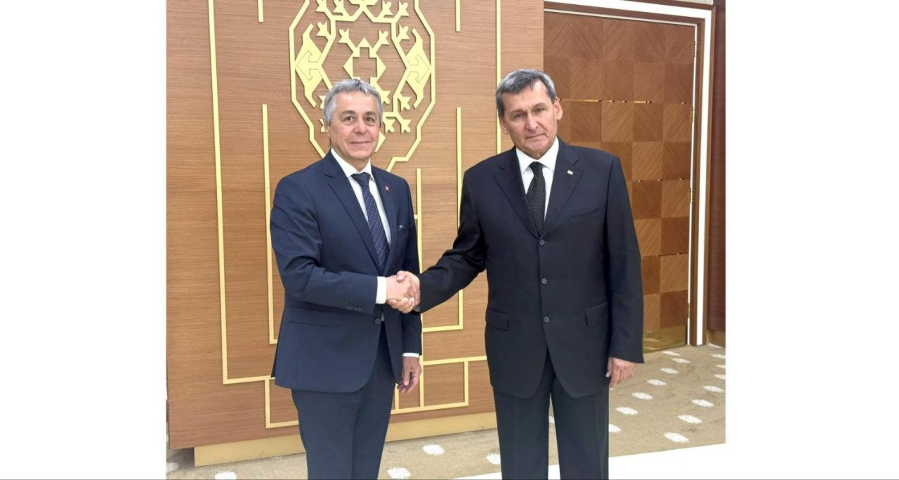
OSCE Speaks of Cooperation with Turkmenistan. But Were Human Rights Discussed? On 5 August 2026, Turkmenistan was visited by the OSCE Chairperson-in-Office, Vice President of the Swiss Confederation and Head of the Federal Department of Foreign Affairs, Ignazio Cassis. He held meetings with President Serdar Berdimuhamedov and Foreign Minister Rashid Meredov. According to statements published by the Ministry of Foreign Affairs of Turkmenistan, the parties discussed the development of cooperation with the OSCE, regional events, energy, transport, economic development, environmental protection, and water resources. Moreover, the official statement claims that the President of Turkmenistan specifically emphasized the importance of “ensuring human rights and democratic principles” and the need to further develop cooperation with the OSCE in this area. This is precisely why we have a fundamental question for the OSCE Chairperson-in-Office and other representatives of the Organization: what specific human rights issues were raised during these meetings? We would like to know whether the following issues were discussed with the Turkmen authorities: transnational repression targeting Turkmen activists, journalists, government critics, and their relatives abroad; violence against women and children, as well as the absence of effective mechanisms for protecting victims; the inability of many Turkmen citizens abroad to obtain or renew their passports through Turkmenistan’s diplomatic missions; travel bans and de facto restrictions on freedom of movement; political prisoners, enforced disappearances, torture, and cruel, inhuman or degrading treatment; the absence of a genuinely independent judiciary and effective mechanisms for challenging the actions of state authorities; discrimination on regional, social, gender, and other grounds; low wages, the actual level of poverty, and the discrepancy between official statistics and the everyday reality faced by the population; the existence of official and parallel-market exchange rates for the US dollar and the consequences of this system for ordinary citizens; the state of infrastructure and access to quality healthcare, education, the internet, and other essential services; mass labour migration and the reasons that force hundreds of thousands of citizens to seek opportunities to live and work outside the country; restrictions on freedom of expression, peaceful assembly, association, access to independent information, and the activities of civil society. This is far from an exhaustive list of the systemic problems that have been reported for years by citizens of Turkmenistan, independent journalists, and international human rights organizations. It is particularly important to receive an answer because human rights are not a secondary issue, but form one of the OSCE’s three dimensions of security. Cooperation with Turkmenistan therefore cannot be assessed solely by the number of conferences, projects, and diplomatic meetings held. If these issues were indeed discussed during the talks, the public has a right to know: Which specific concerns were raised with the Turkmen authorities? What responses were received? What concrete changes does the OSCE expect from Turkmenistan? If these issues were not raised, then another question arises: what does the declared cooperation in the field of human rights and democracy actually mean? We call on OSCE Chairperson-in-Office Ignazio Cassis, the OSCE Secretariat, the Organization’s institutions, and the OSCE Centre in Ashgabat to publicly clarify the human rights component of the talks held in Turkmenistan. Dialogue with Turkmenistan is necessary. But dialogue must not become a diplomatic ritual in which “constructive cooperation” is repeatedly praised while the real lives and fates of people remain outside the official agenda. Human rights must be discussed not through general statements, but through specific problems, specific obligations of the state, and specific, measurable results.
As a foundation, every individual's fundamental
protect and develop their rights
we are working for.