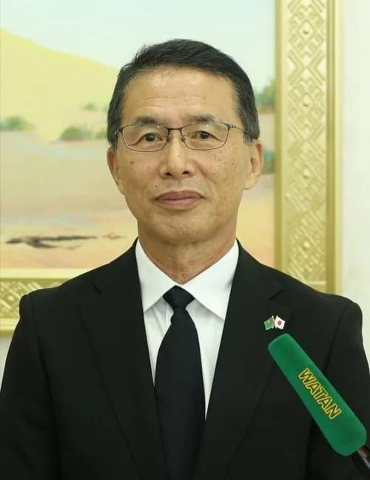
Japanese Investment in Turkmenistan: Major Projects Must Not Overshadow the Situation of the People Turkmen media reported on a meeting between President of Turkmenistan Serdar Berdimuhamedov and Eiji Hosoi, President and Chief Executive Officer of Toyo Engineering Corporation, who arrived in the country to participate in events marking the 35th anniversary of independence. The official report focused primarily on the development of Turkmen-Japanese economic cooperation. It highlighted the involvement of major Japanese companies in projects in the gas and chemical industries, while the representative of Toyo Engineering Corporation reportedly expressed appreciation for the conditions created for Japanese companies operating in Turkmenistan. Yet it is precisely these references to favorable “conditions” that raise a much broader question. What conditions have been created in Turkmenistan not for foreign corporations, but for the millions of people who live there? Behind the façade of major international projects lie problems that cannot be separated from economic cooperation with the state: the situation of workers, low wages and limited purchasing power, restrictions on fundamental freedoms, insufficient guarantees of independent justice, and risks faced by those who openly speak about human rights violations. The economic situation of the population deserves particular attention. The significant gap between the official exchange rate of the Turkmen manat and the rate on the unofficial market directly affects any assessment of the real value of wages and the purchasing power of citizens. Official macroeconomic indicators alone are therefore insufficient to understand the actual conditions in which families live and employees work. Labor rights are an equally serious concern. For many years, human rights defenders have raised concerns about forced labor, particularly in connection with the cotton harvest, pressure on public-sector employees, various mandatory or effectively coercive financial contributions, and the absence of safe and genuinely independent mechanisms through which workers can report violations of their rights without fear of negative consequences. For an international corporation, these issues should not simply be treated as the “internal affairs” of a state. When a foreign company implements major projects in a country, it should know who performs the work, under what conditions, what workers actually earn, whether occupational health and safety standards are respected, whether there are indications of coercion, whether workers are subjected to improper deductions or compulsory collections, how contractors and subcontractors operate, and whether employees can refuse abusive practices without fear of retaliation. But the problem extends far beyond labor relations. Independent human rights defenders and international mechanisms have repeatedly raised concerns regarding freedom of expression and access to information, freedom of movement, the treatment of civic activists and government critics, pressure on their relatives, and actions targeting Turkmen citizens outside the country that human rights organizations have addressed in the context of transnational repression. The situation of women and the effectiveness of state protection against violence also require particular attention. If a woman experiencing violence cannot rely on accessible and effective protection, a proper investigation, and a fair judicial process, the problem goes far beyond individual family tragedies. This leads to another fundamental issue: judicial independence. For businesses, functioning courts mean protection of contracts and investments. For ordinary people, an independent judiciary means something far more fundamental: the ability to protect their liberty, property, family, labor rights, and other basic rights. International companies should therefore assess not only Turkmenistan’s investment opportunities, but also the legal and human rights environment in which their projects are implemented. It is in this context that Dayanç addresses the leadership of Toyo Engineering Corporation and Mr. Eiji Hosoi directly. When state representatives tell you about favorable conditions for Japanese companies, we ask you to look beyond official presentations and protocol meetings. Ask what an ordinary worker’s salary is actually worth in terms of purchasing power. Ask whether genuinely independent mechanisms exist to protect workers’ rights. Examine whether employees working for your partners, contractors, and subcontractors are exposed to forced labor, compulsory financial contributions, or other forms of pressure. Ask where a person can turn when their rights are violated and how independent from the executive authorities the institutions responsible for examining such complaints actually are. Pay attention to the situation of women, civic activists, journalists, relatives of government critics, and Turkmen citizens living abroad. And most importantly, do not rely exclusively on information provided by state authorities. The UN Guiding Principles on Business and Human Rights establish the corporate responsibility to respect human rights, including through human rights due diligence. For an international company, this means identifying, preventing, and mitigating adverse human rights impacts that may be linked to its operations, products, services, or business relationships. Dayanç therefore calls on Toyo Engineering Corporation to conduct enhanced human rights due diligence concerning its operations and business relationships in Turkmenistan, with particular attention to labor rights, wages and working conditions, forced labor, potentially coercive financial collections, contractors and subcontractors, grievance mechanisms, and protection against retaliation for reporting abuses. We also encourage Toyo Engineering Corporation to establish direct dialogue with independent representatives of Turkmen civil society and human rights defenders. Dayanç is prepared to provide the company with documented information concerning systemic human rights problems and individual cases. Cooperation with Turkmenistan should not be reduced to the value of contracts, volumes of gas, construction of industrial facilities, and statements about economic partnership. International businesses possess not only economic opportunities. Their presence also carries responsibility — at the very least, the responsibility to ensure that economic cooperation does not come at the cost of ignoring people’s fundamental rights. Favorable conditions for international business cannot substitute for conditions that allow a country’s people to live, work, exercise their freedoms, and preserve their dignity. That is why, when meeting with Turkmenistan’s leadership and discussing new projects, international companies should speak not only about what else can be built in Turkmenistan, but also ask under what conditions the people whose labor makes those projects possible are actually living and working.
As a foundation, every individual's fundamental
protect and develop their rights
we are working for.