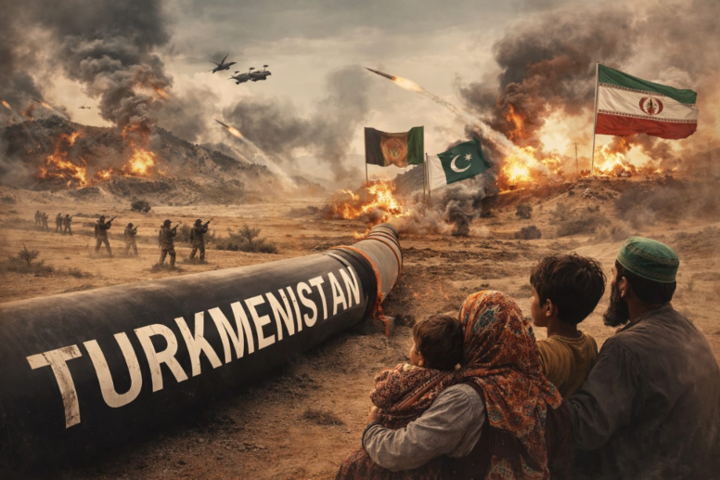
Turkmenistan — one of the world’s largest gas producers — has found itself in a situation where external conflicts directly affect not only the economy, but also the fundamental rights of its citizens. Several crises at once — tensions around Iran and the escalation between Afghanistan and Pakistan — have effectively struck at the country’s key strategic resource: gas exports. However, behind economic figures lies a much deeper problem — state vulnerability, in which ordinary people suffer the most. Gas Dependency Means Political Vulnerability Today, more than 70% of Turkmen gas is exported to China. This makes the country dependent on a single buyer, who dictates both terms and prices. Attempts to diversify exports — toward Turkey, Europe, or South Asia — face a harsh reality: every route passes through unstable regions. 👉 As a result: the country cannot freely manage its own resources the economy becomes dependent on external factors citizens bear the consequences of economic instability TAPI: A Project of Hope Turned into a Dead End The TAPI pipeline (Turkmenistan – Afghanistan – Pakistan – India) has long been seen as a way out of dependency. But the reality is clear: Afghanistan remains unstable Pakistan is involved in ongoing conflicts India is reluctant to depend on a conflict-prone region Despite formal support, 👉 the project remains stalled. This means: 👉 Turkmenistan remains without alternative markets 👉 and its citizens without economic stability The Iran Factor: Missed Opportunities and New Risks Rising global energy prices amid war could have been an opportunity for Turkmenistan. But: the country has no access to open seas and global maritime routes there is no LNG export infrastructure pipeline routes remain highly vulnerable Instead of benefiting, Turkmenistan faces new limitations. Moreover, if Iran stabilizes and sanctions are lifted, it may become a major competitor for Turkmenistan in key energy markets, given its direct access to global maritime routes. Where Are the People in This System? In all this geopolitical complexity, one crucial element is missing — the citizen. Economic instability directly affects human rights: rising prices for food and essential goods lack of transparent information from authorities inability to plan for the future increasing labor migration restrictions on freedom of movement Most importantly: 👉 in times of crisis, the government fails to inform citizens and provide clear solutions The Right to Information Is Being Ignored Despite serious regional risks, the authorities in Turkmenistan: do not issue official statements do not inform citizens about potential threats do not publish action plans This constitutes a direct violation of citizens’ rights: the right to information the right to security the right to participate in public life Conclusion Today, Turkmenistan is trapped in its own model: a resource-based economy without transparency and without respect for human rights. Any external crisis quickly becomes an internal problem. And as long as decisions are made without public participation, it is not pipelines or contracts that suffer — 👉 it is the people. Source: Hronika TM https://www.hronikatm.com/2026/03/pressurized-gas-how-the-wars-surrounding-turkmenistan-are-affecting-gas-exports/�
As a foundation, every individual's fundamental
protect and develop their rights
we are working for.