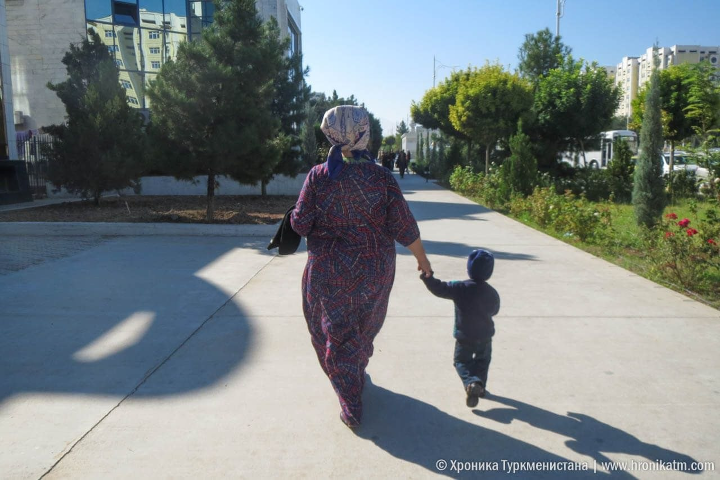
From Kindergarten to School: Why Does the System Never Change? The problems faced by Turkmen families begin long before the first school bell rings. A report published by Chronicles of Turkmenistan on 11 August 2026 about the situation in Ashgabat kindergartens paints a familiar picture: officially, the state system exists and is supposed to be accessible, but in practice parents face unofficial payments, additional expenses, overcrowded groups, and problems with children’s nutrition. According to the publication, parents may be asked to pay a bribe of up to 2,000 manats to secure a place for their child in a kindergarten near their place of residence. After admission, parents are given a list of items they must provide themselves — from bedding and tableware to toilet paper, cleaning products, and laundry detergent. Additional payments of 200–300 manats for various “needs” are also reportedly collected. Food is a separate concern. Parents report that children return home hungry, even though providing adequate meals in preschool institutions should be part of the state system’s responsibility. But when a child grows older and starts school, the problems do not disappear. Families once again have to calculate expenses, purchase necessary supplies themselves, and deal with various additional collections. For low-income households, preparing several children for the new school year can become a serious financial burden. This raises a fundamental question: why does the system not change? Turkmenistan has no objective reason to treat quality education and decent conditions for children as an unaffordable luxury. The country possesses enormous natural resources. Therefore, the issue can no longer be reduced simply to a lack of money. Is it a lack of resources — or a lack of willingness to change the system? If the same problems persist year after year, if parents are forced to pay within a system that the state declares accessible, if the basic needs of educational institutions are effectively shifted onto families, and if reports of corruption and unofficial payments continue to surface, then this is no longer about isolated incidents. It is a systemic problem. The state must ensure transparent financing of kindergartens and schools, effective oversight of how public funds are spent, and a safe mechanism for parents to report abuses. No parent should fear that refusing to pay will result in their child receiving less attention or being treated worse. Most importantly, spending on children must no longer be treated as a secondary priority. Kindergartens and schools are not places where the state should save money at parents’ expense. They are an investment in the country’s future. We therefore also appeal to the citizens of Turkmenistan: share your experiences. How much does it actually cost today to secure a kindergarten place for a child? What payments are collected in schools? How much does it cost to prepare a child for the new school year? What does the state genuinely provide free of charge, and what do families actually have to pay for themselves? As long as these problems remain behind the closed doors of individual families, the system can pretend that they do not exist. When thousands of parents speak about them, however, they become a public issue that demands an answer. Source of information and photo: Chronicles of Turkmenistan, 11 August 2026.
As a foundation, every individual's fundamental
protect and develop their rights
we are working for.