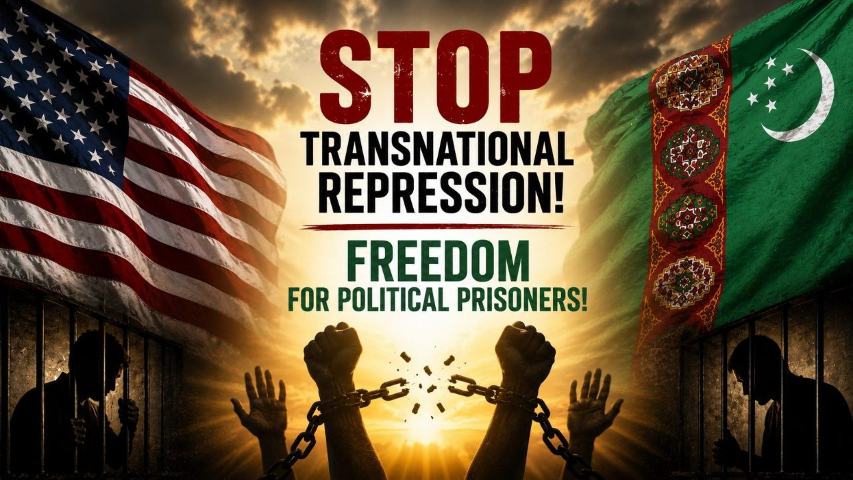
Freedom of Expression in Turkmenistan: Why Optimism Is Impossible Without Ending Repression Open Appeal to the U.S. Embassy in Ashgabat, Sarah Rogers, the U.S. Department of State, and the Government of the United States of America The Human Rights Platform of the Civic Movement “Dayanch” / Turkmenistan has carefully reviewed the publication by Radio Azatlyk / Azathabar regarding the visit of U.S. Deputy Assistant Secretary of State for Public Diplomacy Sarah Rogers to Ashgabat and her statements concerning freedom of expression, internet freedom, innovation, and economic development. Source: Radio Azatlyk / Azathabar Original publication: https://www.azathabar.com/a/abs-resmisi-asgabatda-soz-azatlygyny-ykdysady-osusin-dayanjy-diyip-atlandyrdy/33777469.html Photographs used from this source. We welcome any international attention given to issues of freedom of expression, access to information, independent journalism, and human rights in Turkmenistan. The fact that these issues were publicly raised during the visit of a senior representative of the U.S. Department of State is important and appreciated. However, we believe it is necessary to state clearly and honestly that under the current circumstances, there is no basis for optimism regarding freedom of expression and human rights in Turkmenistan. Freedom of expression cannot be measured by diplomatic meetings, official statements, cultural exchanges, or the existence of a single location with access to uncensored internet. Freedom of expression is measured by whether citizens can openly criticize their government, report corruption, defend their rights, seek justice, and express their opinions without fear of arrest, torture, enforced disappearance, retaliation against their families, or transnational repression. Unfortunately, such freedom does not exist in Turkmenistan today. Transnational Repression as Evidence of the Absence of Freedom of Expression Particular attention must be paid to the systematic transnational repression carried out against Turkmen civil activists, human rights defenders, bloggers, independent voices, and government critics living outside the country. We remind the U.S. Embassy, the U.S. Department of State, and the international community of the alarming case of Alisher Sahatov and Abdulla Orusov, two Turkmen civic activists who disappeared after being released from a deportation center in Turkey in the summer of 2025. Nearly a year later, their fate and whereabouts remain unknown. This is not an isolated incident. It is evidence that citizens of Turkmenistan are not safe even after leaving their country. We also draw attention to the case of Maral Annayeva, a victim of domestic violence and a mother of two children, who was forcibly deported from the United Arab Emirates following actions linked to the authorities of Turkmenistan. Although she was later released, serious concerns remain regarding her safety and the safety of her children. Among those who have been deported, transferred, or otherwise affected following requests from the authorities of Turkmenistan are: Saddam Gulamov; Malikberdi Allamyradov; Azat Isakov; Merdan Muhammedov; Farhad Meymankuliyev; Rovshen Klychev; Maksat Baymyradov; Perhat Genjiyev; and others. Serious concerns also remain regarding the potential extradition of Umida Bekjanova. These cases directly demonstrate that Turkmen authorities and security services continue to use repressive methods to suppress freedom of expression, civic activism, and human rights work. Misuse of Interpol, the G-82 Code, and International Mechanisms Particularly troubling is the reported misuse of international mechanisms for the purpose of targeting government critics. These concerns include the abuse of: Interpol mechanisms; migration procedures; international law-enforcement cooperation; the Turkish G-82 code; deportation procedures; interstate security cooperation channels. These instruments were created to combat genuine criminal activity, not to pursue civil activists, human rights defenders, journalists, or individuals expressing peaceful political opinions. When international mechanisms are used to return critics to a country where they may face imprisonment, torture, fabricated criminal charges, or enforced disappearance, such actions cannot be viewed as legitimate cooperation. They become part of a broader system of human rights violations. Political Prisoners and the Absence of Justice It is impossible to speak about freedom of expression in a country where individuals remain imprisoned because of their civic activities, criticism of authorities, or human rights work. We remind the international community of the cases of political prisoners, including: Mansur Mingelov; Murat Dushemov. Their cases symbolize the lack of judicial independence, the absence of fair trial guarantees, and the failure of institutions that should protect citizens from arbitrary state actions. Turkmenistan cannot be considered a country moving toward openness while political prisoners remain behind bars and independent voices continue to be silenced. Pressure on Families as a Form of Collective Punishment Particular attention must also be given to the systematic pressure placed upon relatives of political prisoners, victims of transnational repression, civil activists, human rights defenders, independent journalists, and citizens who criticize the government from abroad. According to numerous reports, family members are subjected to: questioning by security services; intimidation; threats of dismissal from employment; restrictions on professional opportunities; psychological pressure; attempts to force public denunciations of relatives; limitations on access to documents and services. This practice amounts to collective punishment. No person should be punished because of the views, opinions, or activities of a family member. No mother, spouse, child, brother, or sister should become a target simply because their relative chose to speak openly. The Passport Crisis Facing Turkmen Citizens Abroad Thousands of citizens of Turkmenistan living abroad urgently require access to passport issuance and renewal services through Turkmen diplomatic missions. This is not a request for special treatment. It is a legal right. The issuance of passports abroad is provided for under Article 29, Paragraph 3 of the Migration Law of Turkmenistan, as well as under constitutional guarantees and international human rights obligations. In practice, however, many citizens are denied access to passports for years. This leaves them without valid documents and creates legal uncertainty, preventing them from working legally, studying, accessing healthcare, maintaining legal status, traveling, and exercising their fundamental rights. The denial of passports effectively turns citizens into hostages of their own state. Freedom of Movement and Separated Families Restrictions on freedom of movement remain one of the most painful human rights issues affecting citizens of Turkmenistan. We draw attention to cases involving the Minmuratov family, Lachyn Genj, Sergey Sazonov, and hundreds of other families who have faced travel bans, prolonged family separation, and restrictions on reunification with loved ones. Particularly concerning is the application of Article 30, Paragraph 9 of the Migration Law of Turkmenistan, which is often applied without transparency and effectively restricts the right of citizens to leave the country. Freedom of movement and family reunification are fundamental human rights and should never be used as tools of punishment, political control, or retaliation. The Absence of Safe Reporting Mechanisms Today, there are no genuinely independent and secure mechanisms through which citizens in Turkmenistan can safely report human rights violations, corruption, abuse of power, domestic violence, unlawful dismissals, denial of documentation, misconduct by security services, or judicial injustice. As a result, many citizens are forced to seek help through TikTok, YouTube, foreign media outlets, Telegram channels, and international human rights organizations. Citizens should not have to risk their safety on social media in order to seek justice. The government should establish official, secure, and independent channels through which citizens can safely communicate their concerns. We call upon the authorities of Turkmenistan, with support from international partners, to establish: a national human rights hotline; an anti-corruption hotline; a domestic violence hotline; protection mechanisms for whistleblowers and complainants; an independent complaint submission platform; public oversight mechanisms for complaint review; secure and direct communication channels between citizens and government institutions. These mechanisms must be independent, confidential, and protected from interference by security agencies. Why One American Center Is Not Enough The Azatlyk article highlights the American Center in Ashgabat as a location where citizens can access uncensored internet. However, one center cannot substitute for nationwide internet freedom. If access to independent information is available only in a single controlled location, this cannot be described as genuine internet freedom. True internet freedom means that every citizen, regardless of where they live, can freely access independent media, communicate online, use social networks, share opinions, and criticize government policies without fear of punishment. What Would Constitute Genuine Progress? Optimism regarding human rights in Turkmenistan should not be based on diplomatic statements but on measurable and verifiable reforms. Such reforms would include: the release of all political prisoners; clarification of the fate and whereabouts of Alisher Sahatov and Abdulla Orusov; protection and safety guarantees for Maral Annayeva and her children; an end to transnational repression; an end to pressure on families of activists, human rights defenders, and political prisoners; the cessation of abuses involving Interpol, the G-82 code, and other international mechanisms; passport issuance and renewal through diplomatic missions abroad; removal of restrictions on freedom of movement; repeal or revision of Article 30, Paragraph 9 of the Migration Law; creation of secure and independent complaint mechanisms; establishment of genuine government accountability and public feedback systems; judicial independence; access for independent media; genuine internet freedom; an independent Ombudsman institution; investigations into cases of torture, enforced disappearance, and unlawful deportations; access for international human rights mechanisms; an end to collective punishment of family members. Only after such reforms are implemented can there be legitimate grounds for optimism. Appeal to the U.S. Embassy, the U.S. Department of State, and the U.S. Government We respectfully urge the U.S. Embassy in Ashgabat, Sarah Rogers, the U.S. Department of State, and the Government of the United States not to limit discussions to general statements about openness and freedom of expression. We ask that they consistently and publicly raise specific questions with the authorities of Turkmenistan: Where are Alisher Sahatov and Abdulla Orusov? Why are citizens of Turkmenistan abroad unable to obtain passports through diplomatic missions? Why are families of activists subjected to pressure and intimidation? Why do political prisoners remain imprisoned? Why are international mechanisms used against government critics? Why are citizens forced to seek justice through TikTok rather than through safe and official government channels? Why are independent media, an independent judiciary, and an independent Ombudsman institution absent? We firmly believe that engagement with Turkmenistan should be based not only on technology, trade, cultural cooperation, and diplomatic dialogue, but also on clear and consistent human rights benchmarks. Freedom of expression cannot exist separately from freedom of movement, judicial independence, protection of activists, family rights, access to documentation, and protection from arbitrary detention, disappearance, or politically motivated persecution. The people of Turkmenistan deserve more than symbolic gestures. They deserve genuine protection. They deserve the right to speak. They deserve the right to hear the truth. They deserve the right to seek justice. They deserve the right to live without fear. We sincerely hope that the United States Government, the U.S. Congress, the U.S. Department of State, the U.S. Embassy in Ashgabat, and all international partners of Turkmenistan will evaluate the state of freedom of expression not through official narratives, but through the lived reality of those who remain imprisoned, disappeared, subjected to transnational repression, denied passports, separated from their families, or unable to report violations safely. Freedom of expression begins where people can speak without fear. Unfortunately, thousands of citizens of Turkmenistan still do not have that right. Human Rights Platform of the Civic Movement “Dayanch” / Turkmenistan 🌐 https://dayanchcivil.com/
As a foundation, every individual's fundamental
protect and develop their rights
we are working for.