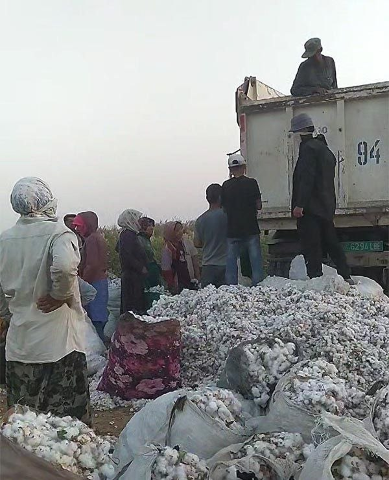
Forced Labor During the Cotton Harvest in Turkmenistan: A System of Fear, Exploitation, and Impunity A major international report on forced labor during the cotton harvest in Turkmenistan has once again exposed the severe human rights situation in the country. The document was prepared by the independent outlet Turkmen.news, the Turkmen Initiative for Human Rights (TIHR), the Progres Foundation, and the international coalition Cotton Campaign. The authors of the report reached an alarming conclusion: despite official statements about reforms and cooperation with the International Labour Organization (ILO), the situation regarding forced labor in 2025 did not improve and, in several areas, became even worse. Source publication: https://turkmen.news/2026/05/14/prinuditelnyy-trud-pri-sbore-hlopka-v-turkmenistane-regress-i-spiralnyy-effekt-na-obshestvo/ Russian summary of the report: https://turkmen.news/wp-content/uploads/2026/05/Turkmenistan-forced-labor-2025-RUS.pdf Full report in English: https://turkmen.news/wp-content/uploads/2026/05/Turkmenistan-forced-labor-2025-ENG.pdf The photographs used in this material were taken from the Turkmen.news publication and the report materials. --- Forced Labor Remains a Systemic State Policy According to the report, forced labor in Turkmenistan continues to be widespread and systemic. Teachers, doctors, kindergarten workers, technical staff, utility workers, and other public sector employees across all regions of the country were once again forced to work in the cotton fields or required to pay money for hired replacement pickers. The daily cotton picking quota averaged between 45 and 50 kilograms. Those who failed to meet the quota faced threats of dismissal, reprimands, humiliation, and worsening working conditions. The report states: > “In schools, kindergartens, hospitals, and other state institutions, there is an entire system of punishment for refusing to pick cotton or refusing to pay for hired laborers.” --- Conscript Soldiers Were Beaten and Humiliated One of the most disturbing parts of the report concerns the use of conscript soldiers as forced laborers. According to human rights defenders, soldiers were sent to cotton fields, forced to perform physically exhausting labor, and punished for failing to fulfill quotas. The report documents: beatings; deprivation of access to showers; humiliation; forced physical exercises; threats and demands for written explanations. At least one soldier was reportedly beaten so severely that he was left lying on the floor in blood. --- The Issue of Conscripts Was Raised by the Dayanç Human Rights Platform at the OSCE The Human Rights Platform of the Dayanç Civil Movement / Turkmenistan raised the issue of forced labor in Turkmenistan during the Organization for Security and Co-operation in Europe (OSCE) meetings in Poland in 2025. Particular attention was given to conscript soldiers who had appealed for help and asked for international publicity regarding their situation. In their statements, representatives of Dayanç emphasized that: conscripts are effectively used as free labor; young men are subjected to violence and intimidation; soldiers are afraid to complain because of threats from commanders; forced labor in the military constitutes a serious violation of human rights and Turkmenistan’s international obligations. Human rights defenders also warned the international community that the lack of accountability creates an atmosphere of complete impunity. --- Women and Children Are Among the Main Victims of the System The report specifically highlights that the forced labor system disproportionately affects women. Women make up the majority of employees in: schools; kindergartens; hospitals; government institutions. Many of them are forced either to work in the fields or surrender part of their already extremely low salaries. The report also states that children continued to participate in cotton harvesting despite the official prohibition on hazardous labor for minors. Children: helped their parents fulfill quotas; worked because of poverty; replaced adult pickers. --- Corruption and Extortion Have Become Part of the System A separate section of the report focuses on corruption. Human rights monitors note: > “Corruption is one of the driving forces of the system.” Public sector employees were regularly forced to contribute money for hired laborers, while part of these funds was allegedly appropriated by managers of state institutions. Workers were forced to pay between 20 and 50 manats per day. In some regions, money was also extorted from private entrepreneurs. --- Farmers Work at a Loss and Leave the Country The report emphasizes that cotton production has become economically devastating for farmers. Farmers face: water shortages; corruption; unrealistic production quotas; poor quality seeds and fertilizers; debt dependency. The report states: > “The costs of cotton production exceed the final payment provided by the state for the harvest.” Against the backdrop of climate problems and severe irrigation water shortages, many farmers are abandoning cotton production and leaving the country in search of work abroad. --- Telling the Truth Leads to Interrogation and Repression Monitoring labor rights violations in Turkmenistan remains extremely dangerous. According to the report, one individual who filmed public sector employees working in cotton fields was detained and interrogated for several hours by security service officers. The authors stress that: independent observers face serious risks; journalists fear reprisals; workers have no effective complaint mechanisms; no official responsible for imposing forced labor has been held accountable. --- International Organizations Are Calling for Action The publication includes statements from international experts and representatives of human rights organizations. Ruslan Myatiev stated: > “Governments and international organizations, including the ILO, must increase pressure on Turkmenistan.” Aynabat Yaylymova of the Progres Foundation stated: > “The Government of Turkmenistan must implement reforms aimed at increasing the independence of farmers and improving transparency in the agricultural sector.” Raluca Dumitrescu of Cotton Campaign called for: recognition of Turkmen cotton as a product produced through state-imposed forced labor; restrictions on imports of such products; stronger international oversight and accountability measures. --- This Problem Extends Beyond Turkmenistan The system of forced labor destroys: education; healthcare; the economy; labor rights; the future of children. It is also directly connected to: poverty; labor migration; corruption; the absence of independent trade unions; the suppression of freedom of expression. When teachers are sent to cotton fields instead of classrooms, children suffer. When doctors are forced to harvest cotton, healthcare suffers. When soldiers are used as unpaid laborers, human dignity is destroyed. --- Sources Turkmen.news: https://turkmen.news/2026/05/14/prinuditelnyy-trud-pri-sbore-hlopka-v-turkmenistane-regress-i-spiralnyy-effekt-na-obshestvo/ Turkmen Initiative for Human Rights (TIHR): https://progres.online/ Cotton Campaign: https://www.cottoncampaign.org/ Russian version of the report: https://turkmen.news/wp-content/uploads/2026/05/Turkmenistan-forced-labor-2025-RUS.pdf English version of the report: https://turkmen.news/wp-content/uploads/2026/05/Turkmenistan-forced-labor-2025-ENG.pdf Photos: Turkmen.news / materials from the report on forced labor in Turkmenistan.
As a foundation, every individual's fundamental
protect and develop their rights
we are working for.