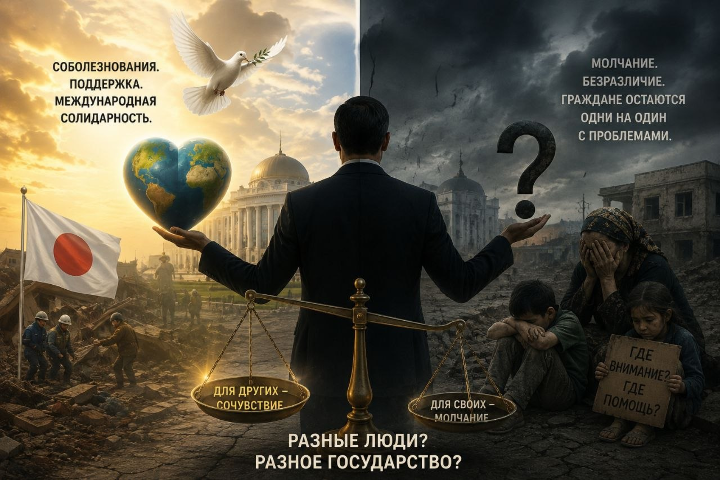
Condolences Abroad, Silence at Home: Why the Citizens of Turkmenistan Expect the Same Concern from Their Own State President of Turkmenistan Serdar Berdimuhamedov sent condolences to Japanese Prime Minister Sanae Takaichi following the devastating earthquake in Kumamoto Prefecture, which resulted in loss of life and injuries. According to media reports, on behalf of the people and Government of Turkmenistan, as well as personally, the President expressed his sympathy and support to the families of those who lost their lives and wished a speedy recovery to all those injured. The very act of expressing condolences deserves respect. Compassion for people who have experienced tragedy should not depend on national borders or nationality. International solidarity in times of natural disasters and human loss is essential. Yet such reports inevitably raise another, far more painful question for the citizens of Turkmenistan: Why is the state able to publicly demonstrate compassion toward victims abroad, while it does not always show the same openness, attention, and concern when emergencies affect its own citizens? Two Different Approaches? The contrast is striking. When tragedy occurs outside Turkmenistan, state media promptly report the President’s condolences, emphasizing his support for the victims and Turkmenistan’s solidarity with another country. But when serious incidents occur within Turkmenistan, society often faces a very different information environment: a lack of official information, insufficient details about the number of victims, the causes of the incident, and the assistance being provided. This inevitably creates a sense of injustice. Why is the compassion that the state publicly demonstrates to the international community not always equally visible at home? The point is not that Turkmenistan should refrain from expressing condolences to Japan or any other country. On the contrary, it should do so. The point is that its own citizens deserve no less attention. Emergencies Must Not Simply Be Hidden For someone who has lost a loved one, a home, property, or who has found themselves in a desperate situation following an emergency, silence from state media is not enough. People need information, assistance, an investigation, and reassurance that the state stands with them. When a tragedy occurs, the state should openly disclose: what happened and why; how many people were killed or injured; what assistance is being provided to the victims and their families; whether an investigation is being conducted; who will be held accountable if negligence or safety violations contributed to the tragedy; what measures are being taken to prevent similar incidents in the future. Hiding a problem does not make it disappear. It only leaves people alone with their grief and undermines public trust in state institutions. Who Will Express Condolences to Our Own Citizens? This is why a very simple question must be asked: If the President of Turkmenistan, on behalf of the people and the Government, can express sympathy to families who have lost loved ones in another country, who will publicly express the same sympathy to the families of Turkmen citizens when tragedy strikes at home? Who will listen to them? Who will provide them with assistance? Who will demand an objective investigation? Who will explain to society what happened? And who will take responsibility for protecting them? A president is not merely a representative of the state on the international stage. The head of state bears responsibility first and foremost toward the country’s own citizens, while the Constitution and state institutions must serve to protect their rights, lives, and safety. A Country’s International Image Begins with How It Treats Its Own People The image of a humane and responsible state cannot be built solely through diplomatic statements. A state’s true attitude toward human life is demonstrated first and foremost at home — at the very moment when ordinary people genuinely need its help. A government may express condolences to foreign countries and speak about humanitarian values, peace, and international solidarity. But these principles acquire genuine meaning only when they are applied equally to its own citizens. Humanity and compassion should not exist solely for the international stage. We sincerely express our condolences to the people of Japan, the families of those who lost their lives, and everyone affected by this tragedy. At the same time, we address President of Turkmenistan Serdar Berdimuhamedov: The citizens of Turkmenistan also deserve your attention. They have the right to know the truth about emergencies occurring in their own country, to receive timely assistance and support from the state, and to see that human life is genuinely valued not only in foreign-policy statements, but also at home. There should not be one state — open, compassionate, and humane — for the international community, and an entirely different approach toward people within the country. Otherwise, a painful question inevitably arises: do the citizens of Turkmenistan somehow deserve less compassion, attention, and protection from their own state?
As a foundation, every individual's fundamental
protect and develop their rights
we are working for.