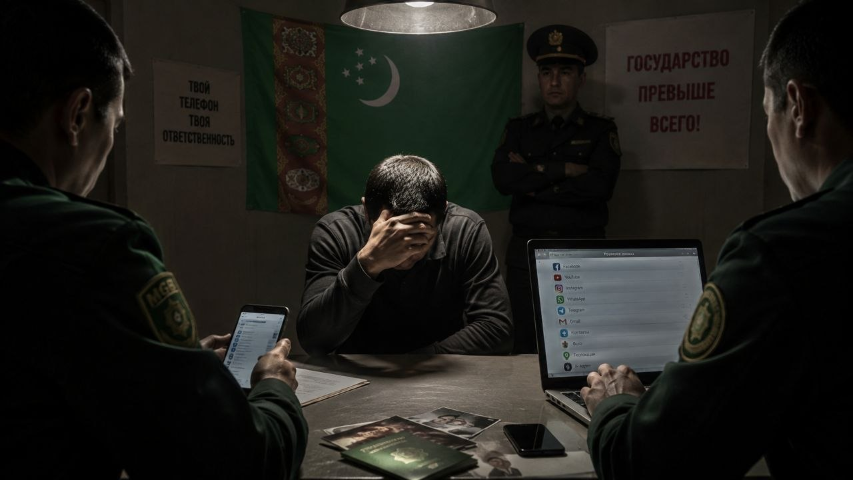
Are the Authorities Afraid of Their Own People? On the Reported Interrogation of Deportees at Ashgabat Airport According to a report by Radio Azatlyk, approximately 100 Turkmen citizens deported from Turkey and arriving on a flight from Istanbul to Ashgabat on June 8, 2026, were subjected to extensive questioning and screening by officers of Turkmenistan’s Ministry of National Security at the airport. Sources cited by Azatlyk claim that mobile phones were inspected, contacts and email accounts were reviewed, IP addresses were checked, and individuals were questioned about their social media activity, YouTube subscriptions, and online interactions. Source: Radio Azatlyk / Azathabar https://www.azathabar.com/a/turkiyeden-cykarylan-100-e-golay-turkmenistanly-asgabadyn-ucar-menzilinde-soraga-cekildi/33778247.html If these reports are accurate, one fundamental question arises: What is the government afraid of? Its own people? Why should a citizen returning home be treated as a suspect rather than as a member of society? Why should people be required to explain which news sources they follow, which videos they watch, or whom they communicate with abroad? Freedom of expression, the right to privacy, and freedom of association are fundamental human rights protected under international law. These rights do not disappear when a person crosses the border into their own country. Particularly alarming are the reports that authorities examined personal phones and scrutinized citizens’ digital activities. Such practices create a climate of fear in which people become afraid not only to speak, but even to read independent news, watch online content, or communicate with friends and family abroad. Over the past several years, thousands of Turkmen citizens have left the country in search of employment, safety, and a dignified future. The reasons are well known: economic hardship, limited job opportunities, administrative barriers, and the lack of independent mechanisms to protect citizens’ rights. Instead of addressing these underlying issues, the authorities appear, according to the reported information, to be searching for “suspicious” individuals among their own population. But migrants are not enemies of the state. They are people who support their families, send money home, care for their children and parents, and contribute significantly to the country’s economy through remittances. They deserve respect and protection—not suspicion and intimidation. Especially concerning are reports suggesting the creation of lists of “suspicious citizens.” Any such measures must be transparent, lawful, and subject to oversight. No one should face persecution for peacefully expressing opinions, reading independent media, or communicating with journalists, activists, or human rights defenders. The international community, diplomatic missions, United Nations bodies, the OSCE, and human rights organizations should closely monitor these reports and seek greater transparency regarding the treatment of deported Turkmen citizens. Because one question remains unanswered: How much longer will this continue? How much longer will Turkmen citizens return home feeling fear instead of security? How much longer will criticism be treated as a threat and ordinary citizens as objects of suspicion? A strong state does not fear questions. A strong state does not fear its own people. A strong state protects the rights and dignity of its citizens rather than attempting to control their thoughts. Respect for human rights, human dignity, and fundamental freedoms is the true measure of a state's strength—not the number of interrogations conducted at an airport.
As a foundation, every individual's fundamental
protect and develop their rights
we are working for.