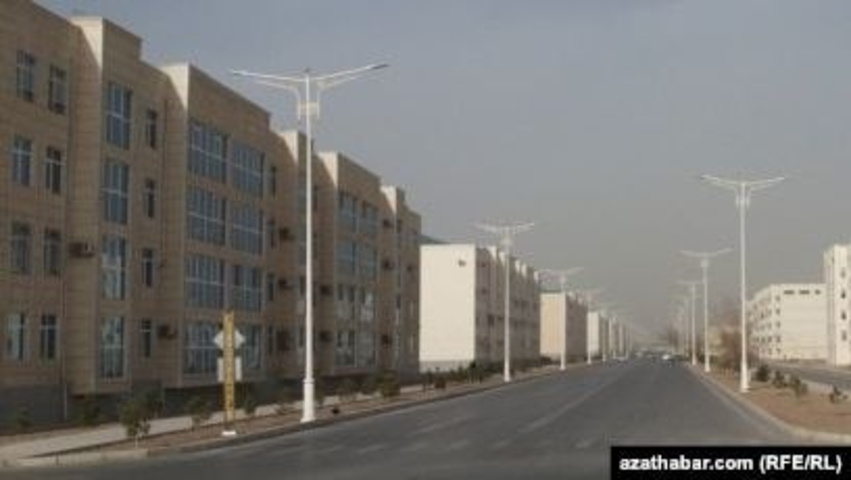
A Destroyed “Paradise”: Who Will Answer for the Fate of “Jennet”? “Jennet” means “Paradise.” Once, the name reflected the place itself: mature trees, a swimming pool, mineral water, recreation and health treatments. Today, residents of Lebap Province speak not of a “paradise,” but of neglect, felled trees and a facility that has effectively been lost to the public. On 12 August 2026, Radio Azatlyk reported on the situation surrounding the “Jennet” health and recreation centre in Charjev District of Lebap Province. According to local residents, for decades it was one of the area’s popular places for recreation and health treatment. People of different ages came there, local mineral water was used for therapeutic purposes, there was a swimming pool, and the grounds were surrounded by large, mature fruit and shade trees. Today, much of this has been destroyed. According to residents, a significant number of trees were cut down, the grounds fell into neglect, and the centre ceased to serve its original purpose. In 2023, the facility was repurposed and allocated as housing for military personnel assigned to the region. According to Radio Azatlyk’s sources, around 20 officers’ families initially moved there, but only four reportedly remain today. Residents also say that over the past two years, many military personnel have left the service and gone abroad in search of work. The result is paradoxical: there is neither the former health centre nor a fully functioning residential complex. Who Decides the Fate of Property Created for the Public? This story goes far beyond the fate of a single facility. If a public facility was created and used for decades in the interests of the community, citizens have the right to know: Who decided to change its purpose? Why was that decision made? How much public money was spent? And why is the facility now largely unused? State property is not ownerless property. The state manages public assets in the interests of society and must remain accountable to its citizens. The loss of health and recreational infrastructure is particularly concerning. The right to the highest attainable standard of physical and mental health is enshrined in Article 12 of the International Covenant on Economic, Social and Cultural Rights. Access to healthcare and health-related infrastructure is directly connected to the fulfilment of this right. For elderly people, families and residents of the regions, facilities such as “Jennet” are not a luxury. They provide an accessible opportunity for recreation, disease prevention and health improvement. Building New While Destroying What Already Exists? Every year, Turkmenistan reports the construction of new facilities and significant public spending on urban development and beautification. At the same time, independent media and citizens repeatedly report the deterioration of existing infrastructure and the destruction of mature green spaces. This raises an obvious question: Why spend enormous sums on new projects if the state cannot preserve what has already been built and has served the public for decades? This is not merely a question of property management. It is a question of budget transparency, public oversight and the accountability of public officials. Citizens Have the Right to an Answer Radio Azatlyk reported another revealing detail: its journalists attempted to obtain comments from local authorities, including regional and district administrations, but their telephone calls on 12 August went unanswered. This is where the story of “Jennet” becomes a human rights issue. Citizens have the right to question their government. Journalists have the right to seek information of public interest. State institutions must be accountable to society. People should not be expected to silently watch facilities created for their benefit being repurposed, neglected or destroyed without even receiving an explanation. Residents of Lebap are asking for “Jennet” to be restored to its original purpose. Their demand deserves a public response. We call on the authorities of Turkmenistan to explain what has happened to the “Jennet” health and recreation centre, disclose information about the decisions taken and the expenditure of public funds, assess the damage caused, and consider the full restoration of the complex. “Jennet” means “Paradise.” But paradise cannot be built with beautiful words and new façades. It begins where the state protects what was created for its people, listens to its citizens and answers to them for every decision it makes. Source: Radio Azatlyk, 12 August 2026. Factual information concerning the condition of the centre and the views of local residents is based on Radio Azatlyk’s reporting.
As a foundation, every individual's fundamental
protect and develop their rights
we are working for.